Our full legal disclosure is filed with Malta’s financial regulator under the EU’s MiCA crypto rules: notified to the MFSA on 17 July 2025, published 14 August 2025. Verify the filing (opens in a new tab)

THE MINE

Komassala Sud · Bougouni district · Southern Mali

A licensed gold exploration project in Mali · Operating since 2016


BNB Smart Contract Address

THE MINE

Twelve years of work, and its results.

65 km²Exploration area
17,000 mDrilled since 2016
22,000Samples analyzed
1.2 of 65 km²Explored area so far
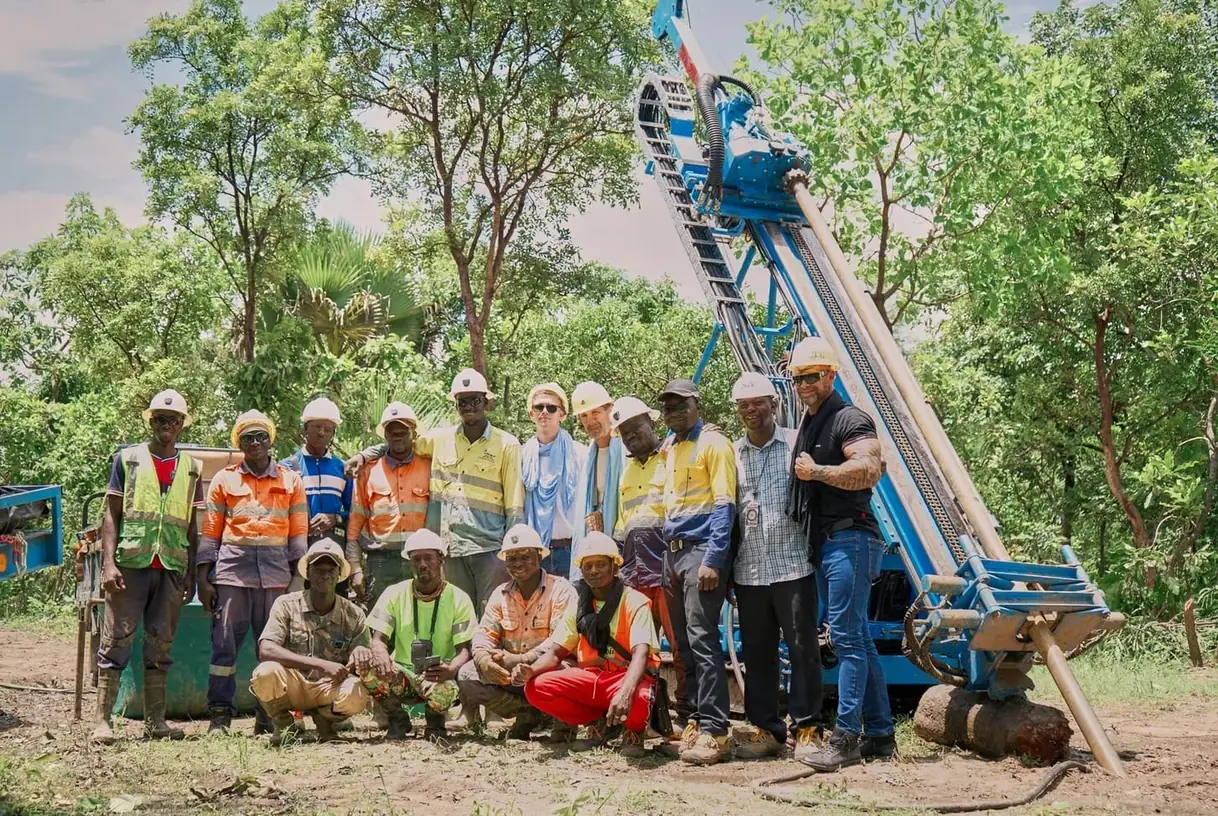
The Komassala Sud crew standing with the drilling rig at the exploration site in southern Mali.Slide 1 of 3: The Komassala Sud crew standing with the drilling rig at the exploration site in southern Mali.

The Operator

Green Gold System Europe SARL (GGS) was established in 2014 and signed a Convention with the Government of Mali in September 2015, later renewed to align with Mali’s new mining law (adopted by parliament in 2019 and brought into force in 2023).

Company documents for GGS, along with the exploration and extraction permits, can be requested at business@apraemio.com. Its 65 km² licensed zone sits in the Bougouni gold district, in a geological belt that places Mali among Africa’s top five gold producers and the world’s top twenty.

Since 2016, GGS has drilled 17,000 meters and analyzed roughly 22,000 geological samples in accredited laboratories (SGS, ALS and ProsLabs). Across the 1.2 km² explored under the 2024 drilling program, 2% of the concession area, credible calculations identified 13.59 tonnes of economically extractable gold. On the first planned mine site the operator expects 5 to 7 tonnes.

The GGS team of Malian and Hungarian geologists is compiling reports that meet international standards. A JORC or NI 43-101 resource report is expected in due course.
THE CORE LOG · 2014 → 2027

2014

GGS established in Mali

2015

Convention signed with the Government of Mali (September)

2016

Core drilling begins under the September 2015 convention

2019

Mali’s new mining law adopted; GGS renews its convention to align with it

2021

Core drilling programs completed

2024

40+ drill holes. The drilling program puts 13.59 t of gold in the first 1.2 km²

2025

900+ samples lab-tested; mining pit candidate identified

2026Current phase

Agreements signed with the production partner. Mine planning, infrastructure, machinery sourcing and refinery partner selection via Arteus’s network

2027

Target for the start of production, in the second quarter. PRP gold purchases begin then

Mine Overview & Development Updates

  1. 2024 Development updates

    GGS drilled more than 40 holes in 2024, with samples going to the laboratories year-round. The core showed a complicated subsurface of gold-bearing and barren zones: promising mineralized layers in the southwest, mixed results in the northeast. Each round of lab data went back into the geological model. Flooding during the rainy season slowed the field crews without stopping them, and the mapping and sampling programs ran to the end of the year.

  2. 2025 Development updates

    Sampling, drilling and site analysis carried on through 2025. The laboratories returned more than 900 samples, the crews mapped the quartz-rich formations in detail, and Malian and international geologists worked together to pin down the mining coordinates. The rock is volcanic and granitic, veined heavily with quartz. Planning meetings ran alongside the fieldwork and moved the mine development phase closer to construction.

  3. 2026 Development updates

    In 2026 the project moved from exploration toward mine development. On April 3, Dr. Zoltán Varga and the CEO of the Wacom Group signed three agreements governing the joint development of the Mali gold mine and the extraction of its gold, establishing the legal framework for long-term cooperation. The two teams met again in Nice in June to advance the practical preparations for opening the mine: the construction of an access road of more than 20 km linking the future mine site to the national main road, alongside detailed water-management planning for the streams and river affecting the area and the safe storage of rainwater during the region’s rainy season. Hungarian geologists and mining engineers took the mine design forward at the same time, drawing on the last drilling samples to come back from the laboratory and on the results of an aerial survey of the site, while the research and extraction permits moved ahead under Mali’s new Mining Code.

Join the Apraemio Ecosystem