Not Hype, but Credibility
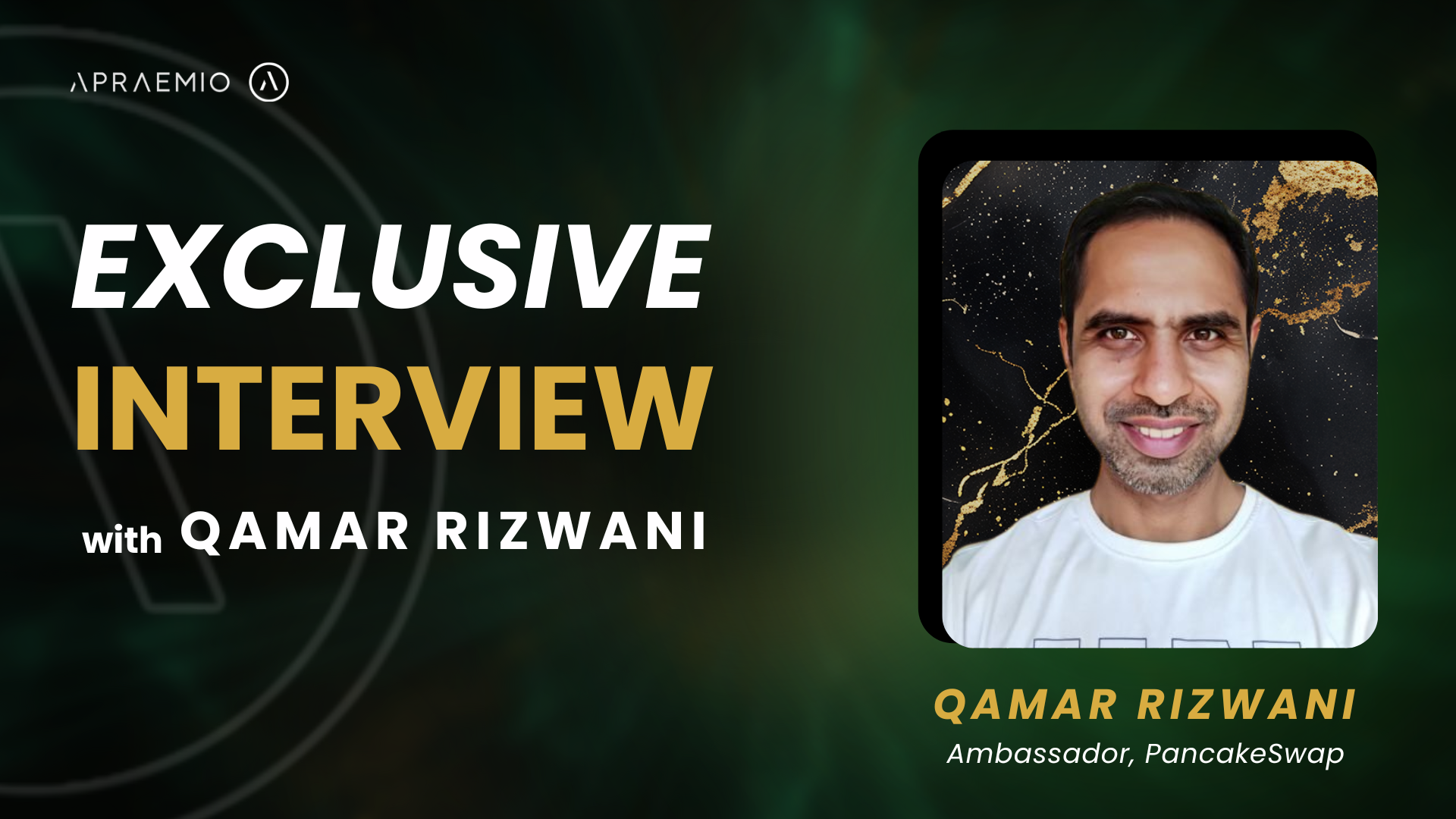
Interview with Qamar Rizwani on Community Building, Trust, and Real Web3 Leadership
Why Simplifying DeFi Is the Key to Sustainable Web3 Growth
We had the opportunity to sit down with Qamar Rizwani, DeFi educator and community ambassador for PancakeSwap and ApeX Protocol, to discuss how education, trust, and intentional community building are shaping real world DeFi adoption. In this exclusive interview, Qamar shares his journey from engineering and education into decentralized finance, his perspective on what credibility truly means in Web3, and why simplifying complex protocols is essential for empowering everyday users and driving long term adoption.
With a background in both engineering and education, you work in the DeFi space. How did this dual role develop, and what motivates you to make decentralized finance simpler and more understandable for a broader audience?
It all began with curiosity. My background in engineering helped me understand how complex systems are built and how they function beneath the surface, while my experience in education taught me how to communicate those systems clearly to others. When I first encountered DeFi, I immediately recognized it as an incredibly powerful machine, but one that was far too complex and intimidating for the average user. I saw many traders, especially here in India, who felt excluded simply because the language and terminology created an unnecessary barrier. That disconnect genuinely bothered me. I felt strongly that financial freedom should not be reserved only for technical experts. My motivation has always been to break down that wall by translating complex technology into plain, practical language, so that anyone can confidently use platforms like Kommunitas, PancakeSwap, or ApeX without feeling overwhelmed or stressed.
One of the biggest challenges in DeFi today is onboarding. How can bridges be built between users with limited technical knowledge and complex DeFi protocols?
The key is to remove friction by hiding complexity wherever possible. New users should not be forced to immediately worry about private keys, gas fees, or technical jargon before they even understand the value of the product. DeFi platforms need to feel familiar and intuitive, much like the applications people already use in their everyday lives. PancakeSwap and ApeX are strong examples of this approach, as they allow users to get started with something as simple as an email login, instantly removing one of the biggest psychological barriers. Beyond design, education plays a crucial role. We need to move away from intimidating language and focus on practical, step by step guidance. I concentrate on creating simple tutorials that show users exactly what to click and what to expect. When the technology becomes almost invisible, people naturally gain confidence. This is not about oversimplifying the product, but about making it genuinely accessible and building trust through ease of use.
As an ambassador for PancakeSwap and ApeX Protocol, what role do you play in strengthening the connection between local communities and global protocols, and why is this critical for mass adoption?
My role is essentially to serve as a bridge between global teams and local users. While global development teams build remarkable technology, they often lack insight into the specific challenges and expectations of regional communities. By actively engaging with users here in India, I am able to understand their real concerns, whether that involves high transaction fees, confusing interfaces, or unclear documentation. I take this feedback directly to the teams at PancakeSwap and ApeX to ensure that the community’s voice is heard and reflected in future improvements. This process is critical for building trust. Large protocols can feel distant or intimidating, but when users see a familiar local face explaining and advocating for them, they feel safer and more confident. Technology cannot simply be introduced from above; people need guidance and reassurance. That human connection is essential for achieving true mass adoption.
As more projects and opinion leaders appear in the Web3 space, what does credibility mean to you today in the context of a Web3 ambassador or community leader?
For me, credibility is fundamentally about consistency rather than popularity. It has nothing to do with follower counts and everything to do with honesty, even when the message is not exciting or convenient. In Web3, there are too many individuals who focus solely on hype and disappear as soon as market conditions turn negative, which is not leadership. True credibility comes from being transparent about both opportunities and risks. I make it a point to openly share what I am doing, what I am testing, and where potential problems might arise. I am a real person, not just a profile picture. I am a father, an engineer, and someone who personally tests every platform before recommending it to others. If I do not use a product myself, I will never encourage my community to do so. Trust takes time to build, and I treat my audience as friends rather than followers, always prioritizing their safety before potential gains.
How does intentional community building contribute to the long term sustainability of a DeFi project, and what message would you share with APRAEMIO readers who are actively seeking their place within the DeFi and Web3 ecosystem?
Community is the true foundation of any sustainable DeFi project. While code can be copied relatively easily, a loyal and engaged group of users cannot. Projects that rely solely on hype tend to collapse when market sentiment shifts, whereas sustainable projects treat their users as partners rather than customers. When people feel heard and valued, they remain engaged, help identify issues, and naturally bring others into the ecosystem. That level of loyalty is what keeps a protocol alive over the long term. To APRAEMIO readers who are still finding their place in DeFi and Web3, my advice is simple: do not rush the process. You do not need to be a coding expert to contribute meaningfully. Start small and identify what you are already good at, whether that is writing, educating others, or helping newcomers in community channels like Discord. The ecosystem needs far more than just developers; it needs educators, communicators, and guides. Focus on learning first, remain curious, and be patient. The opportunities will follow in time.


